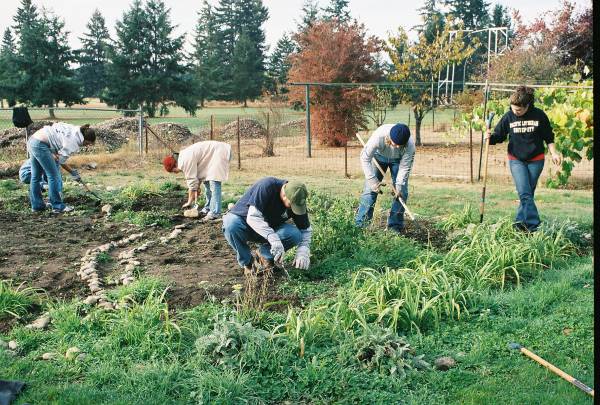
Resident participation in urban green initiatives in Italy takes several distinct forms. At the most structured end, municipalities formally organise volunteer programmes for the maintenance of public green spaces — parks, tree pits, roadside planting — and invite residents to register through civic portals. At the less formal end, neighbourhood groups organise collective work days at community garden sites with minimal institutional involvement.
Neighbourhood Associations and Garden Committees
In cities with established urban allotment programmes, individual garden sites are often governed by a small committee of plot holders elected from among the site's active members. These committees manage practical matters: scheduling collective maintenance days, coordinating access to shared tools, managing the composting area, and acting as the point of contact between the site and the municipality.
Neighbourhood associations (associazioni di quartiere or comitati di quartiere) sometimes play a broader role, particularly where urban garden sites emerged through civic advocacy rather than direct municipal initiative. In these cases, the association may hold the formal agreement with the municipality for site management, while individual plot holders participate through their membership of the association.
Municipal Volunteer Registers
Several Italian municipalities operate formal volunteer registers for green space maintenance. Registered volunteers may commit to regular tasks — watering, weeding, litter collection — at designated public garden sites. Municipalities that operate these programmes typically provide volunteers with basic training, liability insurance during registered activities, and in some cases access to tools stored at the site.
The scope of these programmes varies. Some are limited to the maintenance of existing planting; others extend to planting events, educational activities in schools, or the preparation of new garden areas.

Open Days and Educational Events
Community garden sites in Italian cities often hold open days at points in the calendar linked to the growing season — typically in spring when new plants go in, and in autumn when harvests are shared. These events serve multiple functions: introducing prospective plot holders to the site, sharing knowledge between experienced and newer participants, and maintaining a connection between the garden site and the surrounding neighbourhood.
Some sites run structured educational activities alongside open growing days, including workshops on seed saving, composting technique, organic pest management, and seasonal cooking. These are generally organised by active plot holders or neighbourhood associations rather than by the municipality, though municipal parks departments occasionally provide support.
Schools and Youth Involvement
A number of Italian municipalities have established school garden programmes linking urban allotment sites or community gardens to local primary and secondary schools. These arrangements vary in structure — some involve school classes visiting established garden sites at regular intervals, while others include dedicated plots assigned to schools within larger garden sites, maintained jointly by pupils and garden volunteers.
The institutional basis for these programmes differs between cities. In some cases, formal agreements exist between schools and garden sites. In others, participation is arranged informally between teachers and garden committee members.
Barriers to Participation
Documentation of urban garden participation in Italy points to a number of recurring factors that limit the breadth of involvement at some sites. Waiting lists for plot allocation mean that residents interested in active cultivation may wait for extended periods before securing access. Sites that lack accessible transport connections or facilities for residents with limited mobility see narrower participation profiles than those with better infrastructure.
Language barriers are relevant at some sites in cities with significant non-Italian-speaking resident populations. Garden committees that communicate exclusively in Italian may not reach residents who would otherwise be eligible and interested. Some sites in larger cities have addressed this by ensuring that at least some committee members can communicate in other languages commonly spoken in the area.
Participation and Municipal Green Space Policy
Italian urban planning documents increasingly reference resident involvement in green space management as a component of municipal sustainability strategy. The degree to which this translates into practical support for community garden sites — funding, infrastructure, technical assistance — varies substantially between municipalities and between successive administrations within the same city.
For residents seeking to understand what participation options exist in their city, the relevant starting point is the municipality's green spaces or environment department, which typically maintains information on allotment waiting lists, volunteer programmes, and community garden sites.